The older art
Lbokator: the older Khmer art
What Kun Lbokator is, how it relates to the Kun Khmer you see ringside, what UNESCO listed in 2022 and what the Angkor carvings do and do not prove.
Reserve a ringside seat ↗Quick answer
Kun Lbokator is a Cambodian martial art that UNESCO inscribed on its list of intangible cultural heritage of humanity in 2022. It is a broader system than the glove-and-ring sport you watch ringside, covering strikes, grappling and weapons, and it is practised alongside dance, music and traditional medicine. Kun Khmer grew out of older Khmer martial traditions often called Bokator.
What UNESCO listed
In 2022 UNESCO inscribed Kun Lbokator, traditional martial arts in Cambodia, on its list. Its description calls it a martial art dating back to the first century. It builds physical and mental strength and discipline through self-defence techniques and a philosophy of non-violence, teaches respect for nature and proper conduct, and is practised widely across Cambodia by people of every age, gender and background. The art is still performed in ritual offerings to local deities and at festivals.
What the name means
Cambodia's foreign ministry says the name is often translated as pounding a lion, from words for to pound and lion, and stresses that Lbokator is one style, not a word for every Khmer martial art. You will see it spelled Bokator, L'Bokator and Lbokator. One origin story, retold on Wikipedia, has a warrior armed with only a knife killing an attacking lion with a single knee strike. Sources give slightly different readings of the name, so treat any single translation as one account of several. Cambodia's foreign ministry adds that the art's symbolism also inspires theatre, dance and storytelling.
What it covers
Lbokator covers close-range fighting with the hands, elbows, knees, feet and head, along with ground techniques and weapons. Students train with bare limbs first, and weapons, usually short sticks, come only once they show proficiency. The krama, the traditional checked scarf, is part of the dress, and ranks are marked by krama colours. Women train on equal terms, though their roles in some rituals differ. None of that matches the single-sport format of a Kun Khmer card, which is built around gloves, rounds and a referee. Training also blends physical skill with discipline and social conduct, and masters are described as intermediaries with guardian spirits, so the art has a spiritual side that a sports card does not.
Lbokator and Kun Khmer
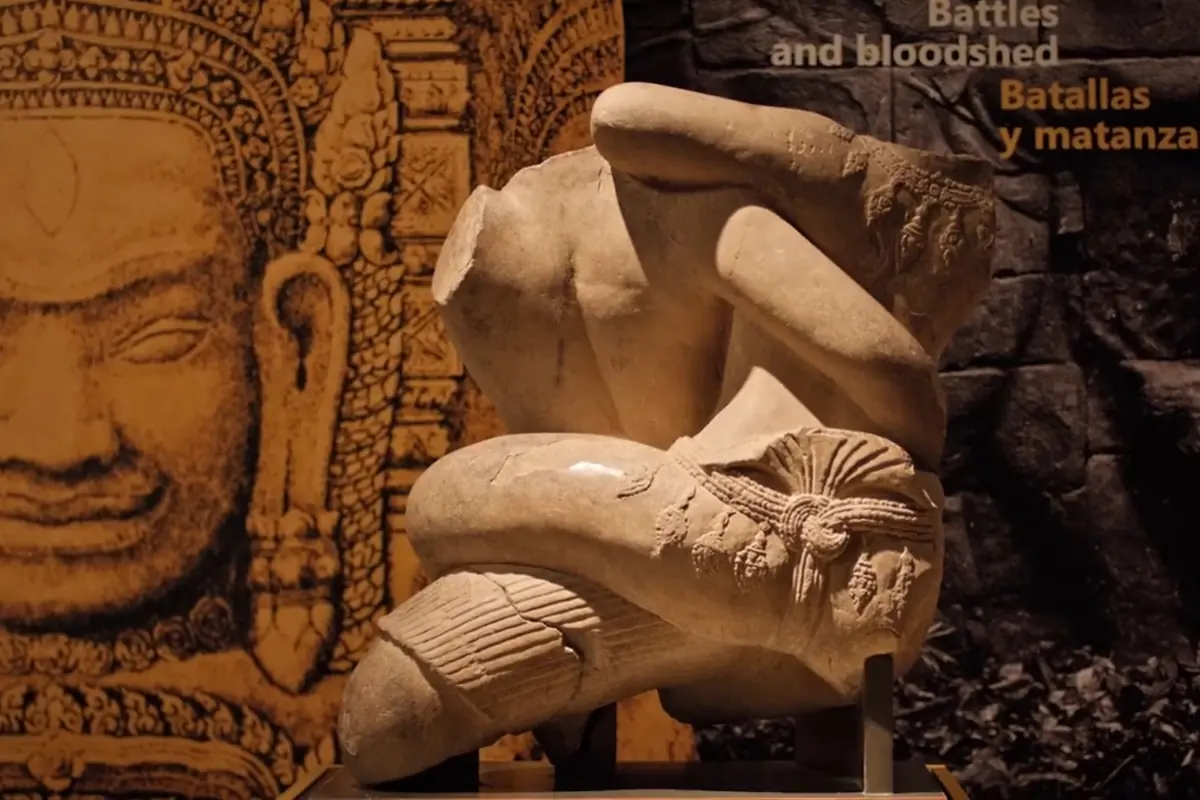
Wikipedia says Kun Khmer grew out of the Khmer martial traditions now often called Bokator, and its article on sport in Cambodia describes pradal serey as a simplified freestyle system that draws on basic techniques from Bokator. The two are therefore related but not the same. Lbokator is a system with weapons and ranks. Kun Khmer is the regulated stand-up sport that French rules shaped in the early twentieth century, and it is what you see at a live card in Phnom Penh.
What the carvings show
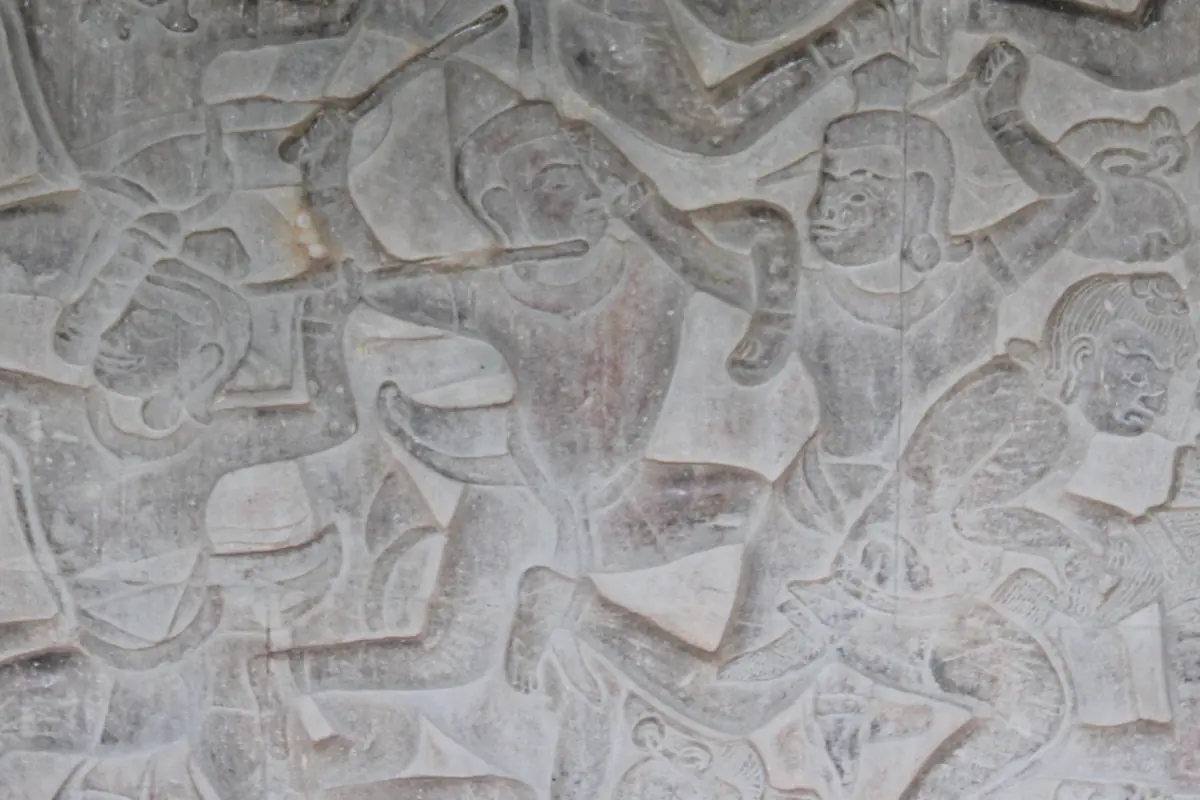
Bas-reliefs at Angkor-period temples, including Angkor Wat and the Bayon, depict techniques such as arm-locks, neck-locks and knee strikes. An archaeologist with the authority that manages Angkor Archaeological Park has said some carvings are related to Kun Khmer, wrestling and Lbokator. The carvings fit these arts, and they do not prove an unbroken line to today's schools. Treat them as a sign that fighting was part of Khmer life by the Angkor period, rather than as a complete record of a single martial art.
What it means for your evening
A live card in Phnom Penh is Kun Khmer, the glove-and-ring sport, and not Lbokator. The two share a history, which your driver may touch on while explaining the sport in English before you enter the arena, and the small-group ticket lists commentary that links the sport to Khmer Empire history. If the stone carvings or the UNESCO listing interest you, take that as the background to the bouts: the evening shows the modern sport, and the older art explains where much of its vocabulary comes from.
Lost, then revived
The Khmer Rouge years, 1975 to 1979, devastated the art: many practitioners were killed, fled or hid their knowledge, and native martial arts were outlawed afterwards. San Kim Sean, often called the father of modern Bokator, returned to Cambodia in 1995 to reintroduce it, and the first national competition was held in 2006. Today a national federation operates under the National Olympic Committee. That recent history is the background to the 2022 UNESCO listing.
Frequently asked questions
Is Lbokator on UNESCO's list?
Yes. UNESCO inscribed Kun Lbokator, traditional martial arts in Cambodia, on its list of the intangible heritage of humanity in 2022.
Is Lbokator the same as Kun Khmer?
No. Kun Khmer grew out of older Khmer martial traditions often called Bokator, but Lbokator is a broader system with weapons and ranks. Kun Khmer is the regulated sport with gloves and rounds.
Will I see Lbokator at a ringside night?
You will see Kun Khmer bouts. Your driver may mention Lbokator as part of the sport's background, but the live card is Kun Khmer.
Sources